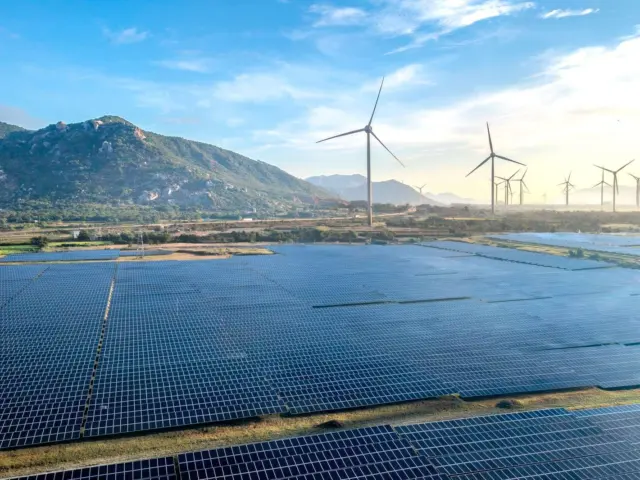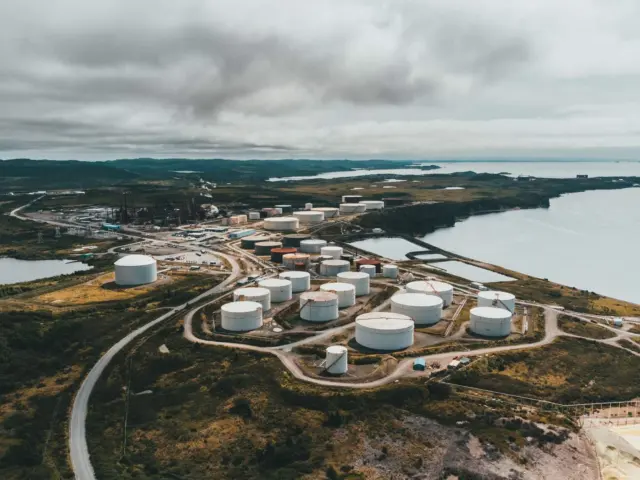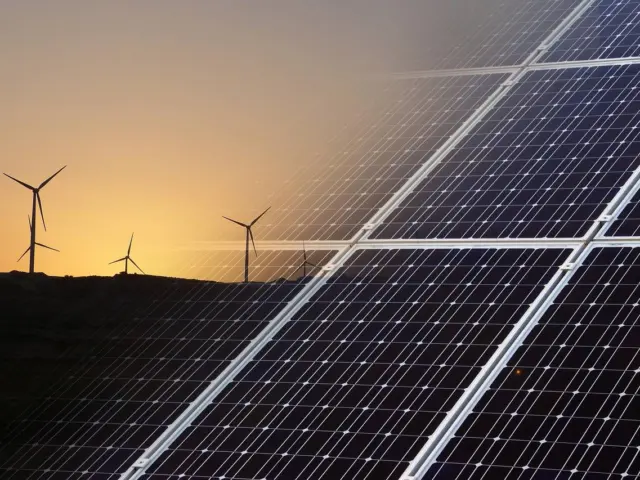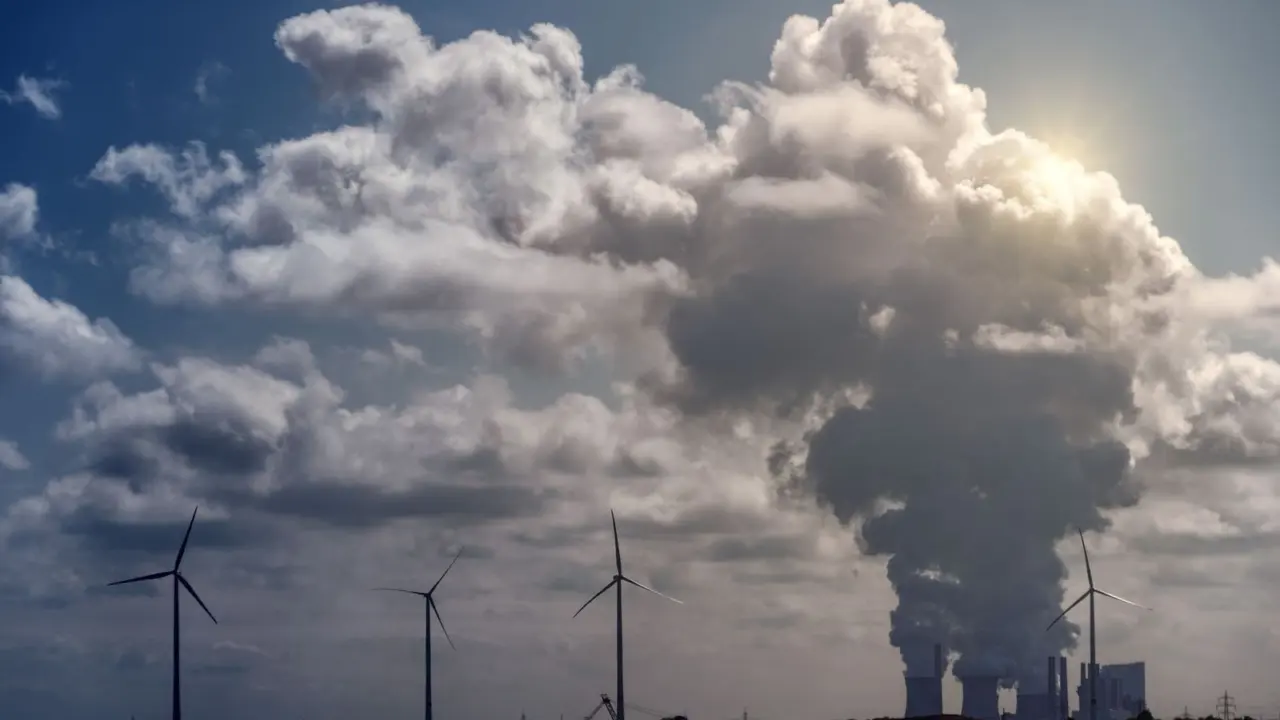
Trying to weigh renewable energy vs fossil fuels? Over a full life cycle, renewables emit far less greenhouse gas per unit of electricity, while fossil fuels still supply most of the world’s power.
If you are new to the topic, start with the basics of what is renewable energy, then come back for the comparison.
| Item | Value |
|---|---|
| Coal, median life-cycle emissions | 820 gCO2eq/kWh |
| Natural gas, median life-cycle emissions | 490 gCO2eq/kWh |
| Dedicated biomass, median life-cycle emissions | 230 gCO2eq/kWh |
| Solar, median life-cycle emissions | 48 gCO2eq/kWh |
| Fossil fuels’ share of global electricity, 2024 | 59 percent |
The emission figures come from the Low-Carbon Power methodology page, which reproduces IPCC values, and the share from Al Jazeera’s report on Ember’s review. Figures can change, so check the source before you rely on them.
What the two groups of energy sources are
Fossil fuels are coal, oil and natural gas. They formed from ancient organic matter and are finite on any human timescale.
Renewable sources, such as sunlight, wind, flowing water, geothermal heat and plant matter, are replenished naturally. Burning a fossil fuel releases carbon that was locked underground for a very long time. Most renewables avoid combustion altogether.
Biomass sits in the middle, because burning it does release carbon. The IPCC notes that direct emissions from biomass combustion are positive and significant, but should be seen in connection with the CO2 absorbed by growing plants. A separate guide on biomass energy pros and cons covers that trade-off.
Renewable energy vs fossil fuels: emissions across the life cycle
The fairest comparison counts everything: building the plant, mining or growing fuel, running it, and decommissioning it. The IPCC calls this the life-cycle approach, and its figures are expressed in grams of CO2-equivalent per kilowatt-hour.
The medians used by Low-Carbon Power are:
- Coal: 820 gCO2eq/kWh
- Gas: 490 gCO2eq/kWh
- Dedicated biomass: 230 gCO2eq/kWh
- Solar: 48 gCO2eq/kWh
The same page states that geothermal, hydropower, nuclear, solar and wind all have more than 10 times lower life-cycle greenhouse gas emissions than any fossil fuel. These figures come from Low-Carbon Power.
Ranges matter too. Gas is cleaner than coal per kilowatt-hour, but it is still far above solar and wind. Biomass depends heavily on the feedstock and how it is grown.
One more caution: these are medians drawn from many studies. A single plant can sit well above or below the median depending on its fuel, equipment, location and how long it operates. Treat the numbers as a guide to the order of magnitude, not as a score for any one project.
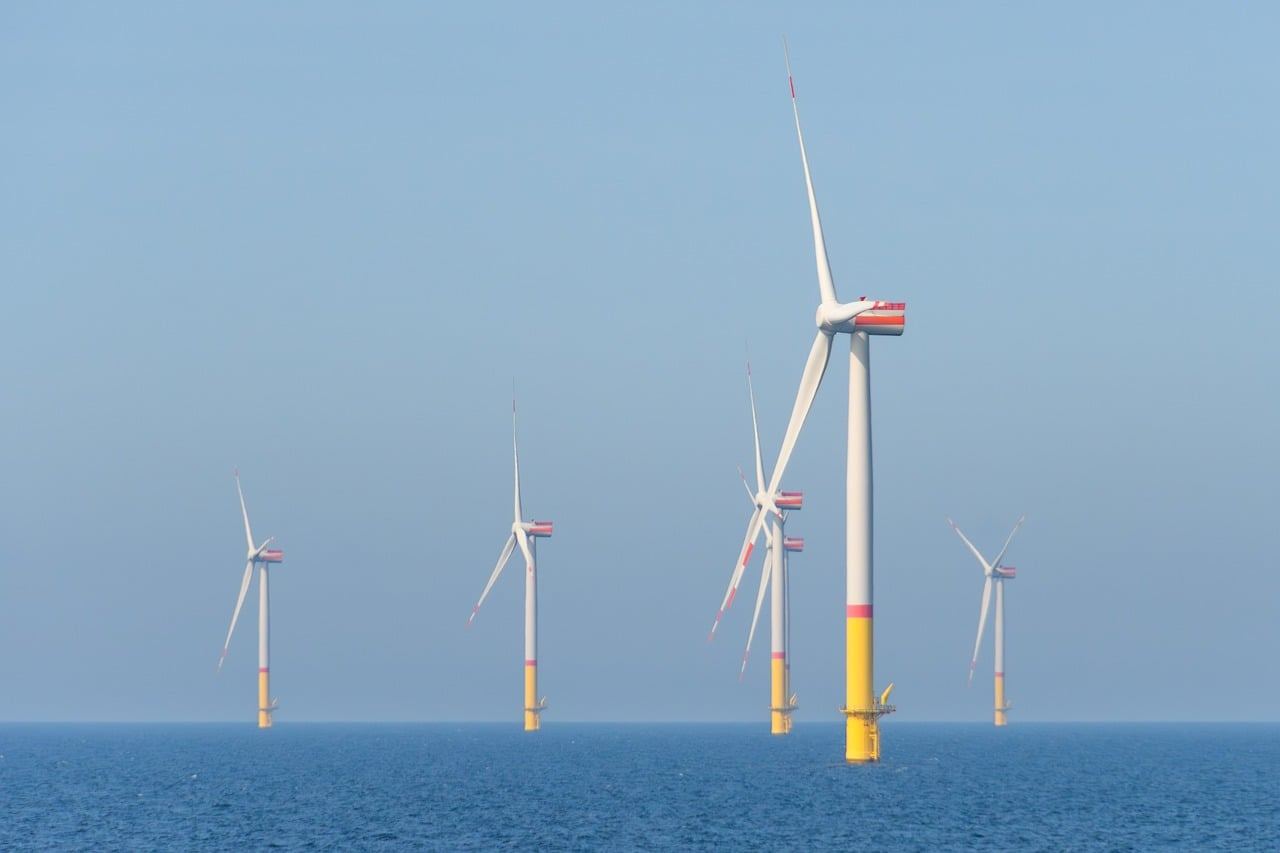
How much of the world’s power comes from each?
Fossil fuels still lead. According to Al Jazeera’s account of Ember’s review, their share of electricity fell from 61 percent in 2023 to 59 percent in 2024, yet they still grew in absolute terms.
The same report says the world produced more than 40 percent of its electricity from clean sources. It adds that solar generation has been doubling every three years since 2012. Clean sources there include nuclear alongside renewables, so the figure is wider than renewables alone.
Share and absolute growth are different things. When demand rises quickly, for example from cooling, data centres or electric vehicles, renewables can gain share while fossil output still increases.
Other differences that shape the choice
Emissions are only one dimension. These factors also come up in energy planning:
- Reliability: Fossil plants can run on demand. Solar and wind vary with weather, so grids need storage, backup or flexible demand.
- Fuel costs: Fossil plants buy fuel continuously and are exposed to price swings. Sun and wind have no fuel bill.
- Air quality: Burning coal, oil and gas releases pollutants that harm health. Wind and solar produce none while operating.
- Land and materials: Renewables need land and mined materials. Fossil fuels need extraction, transport and waste handling.
- Transport fuels: Liquid biofuels are a renewable option for sectors that are hard to electrify, and policy shapes their use.
Policy shapes how much liquid biofuel is used in transport, and a separate guide on the renewable fuel standard explained describes one major US example.
Costs, jobs and energy security
Money is the other half of the debate. Fossil plants carry a fuel bill for as long as they run. Wind and solar flip that balance: most of the spending comes up front, and running costs are low.
Because of that, the cost of capital matters a great deal. Where borrowing is cheap and the grid is modern, renewables tend to look attractive. Where financing is expensive or the grid is weak, the picture can differ.
Security is also part of the discussion. Countries that import oil, gas or coal depend on prices and politics elsewhere. Sunlight, wind and plant residues are local, which is why many governments treat them as a hedge against supply shocks.
Fossil fuels do support large numbers of jobs, and communities built around mines, wells and refineries face real disruption in any transition. Renewable industries create work in manufacturing, installation and maintenance, but the jobs are not always in the same places or the same trades.
What a realistic transition looks like
Energy planners rarely talk about replacing one source overnight. They talk about sequencing: which plants retire first, what gets built to replace them, and how the grid stays stable in between.
- Add renewable generation where resources are strong and the grid can take it.
- Strengthen transmission so power can move from where it is made to where it is used.
- Add storage and flexible demand to cover calm, cloudy periods.
- Electrify transport and heating.
Each step has hurdles, from permitting delays to supply chains for equipment. That is why the shift is gradual in most countries.
Neither side is simple. Renewables win clearly on life-cycle emissions, while fossil fuels still win on installed base and on-demand supply.
Most energy systems are therefore moving through a mix, not a switch. When you read a headline number, check whether it covers electricity or all energy, and whether nuclear is counted as clean.
Check the year as well. Shares shift annually, and newer reports will update the 2024 figures shown above.
Frequently asked questions
Are renewables really cleaner than fossil fuels?
Show answer
Yes, on a life-cycle basis. Low-Carbon Power’s IPCC-based medians put solar at 48 gCO2eq/kWh against 820 for coal and 490 for gas.
Do fossil fuels still dominate electricity?
Show answer
Yes. In Ember’s review, as reported by Al Jazeera, they supplied 59 percent of global electricity in 2024, down from 61 percent in 2023.
Is biomass renewable like solar or wind?
Show answer
It is renewable in principle because plants regrow, but burning it emits carbon at the plant. Its life-cycle median of 230 gCO2eq/kWh sits between fossil fuels and solar.
Why do fossil fuels keep growing if renewables are growing faster?
Show answer
Total demand is also rising. Fossil fuels lost share in 2024 but still grew in absolute terms, according to the same report.