Wondering how does anaerobic digestion work? Microbes in a sealed, air-free tank break down organic waste such as food scraps or manure, releasing methane-rich biogas you can burn for energy and leaving a nutrient-rich digestate.
It is one of the practical routes covered in the wider guide to what is renewable energy.
| Item | Key fact |
|---|---|
| What it is | A natural process in which microorganisms break down organic materials |
| Where it happens | Closed spaces with no air (or oxygen) |
| Main stages | Hydrolysis, acidogenesis, acetogenesis, methanogenesis |
| Biogas contents | Mostly methane and carbon dioxide, with very small amounts of water vapor and other gases |
| Leftover material | Digestate, a wet mixture usually separated into a solid and a liquid |
The basics come from the US EPA’s page on anaerobic digestion, and the stage detail from Wikipedia’s anaerobic digestion entry. Pages get updated, so check the sources before you rely on any figure.
What anaerobic digestion is
According to the US EPA’s archived January 2021 page, anaerobic digestion is the natural process in which microorganisms break down organic materials. It happens in closed spaces where there is no air (or oxygen).
The same page notes that the initials “AD” can mean the process or the built system, also called a digester. All such systems follow the same basic principles, whether the feedstock is food waste, animal manure or wastewater sludge.
The process also occurs without human help. Wikipedia notes it happens naturally in some soils and in lake and ocean sediments. A digester simply gives those microbes a controlled, enclosed home.
How does anaerobic digestion work, stage by stage?
Wikipedia’s entry describes the four key stages as hydrolysis, acidogenesis, acetogenesis and methanogenesis. Different groups of microbes handle each step, and each passes its products to the next.
- Hydrolysis. Large molecules in the waste are too big for microbes to absorb. Hydrolysis breaks the complex organic molecules into simple sugars, amino acids and fatty acids.
- Acidogenesis. Fermentative bacteria break the remaining components down further. Wikipedia compares it to the way milk sours.
- Acetogenesis. Acetogens digest the simple molecules from the previous step into largely acetic acid, plus carbon dioxide and hydrogen.
- Methanogenesis. Methanogens convert these products to methane and carbon dioxide.
Why the final stage needs care
Wikipedia states that methanogenesis is sensitive to both high and low pHs and occurs between pH 6.5 and pH 8.
That is why operators watch acidity, temperature and feed rate.
What comes out: biogas and digestate
The EPA page says biogas is mostly methane (CH4) and carbon dioxide (CO2), with very small amounts of water vapor and other gases. It adds that the carbon dioxide and other gases can be removed, leaving only the methane, which is the primary component of natural gas.
Wikipedia notes that most of the chemical energy in the starting material is released by methanogenic archaea as methane. That is where the usable energy comes from.
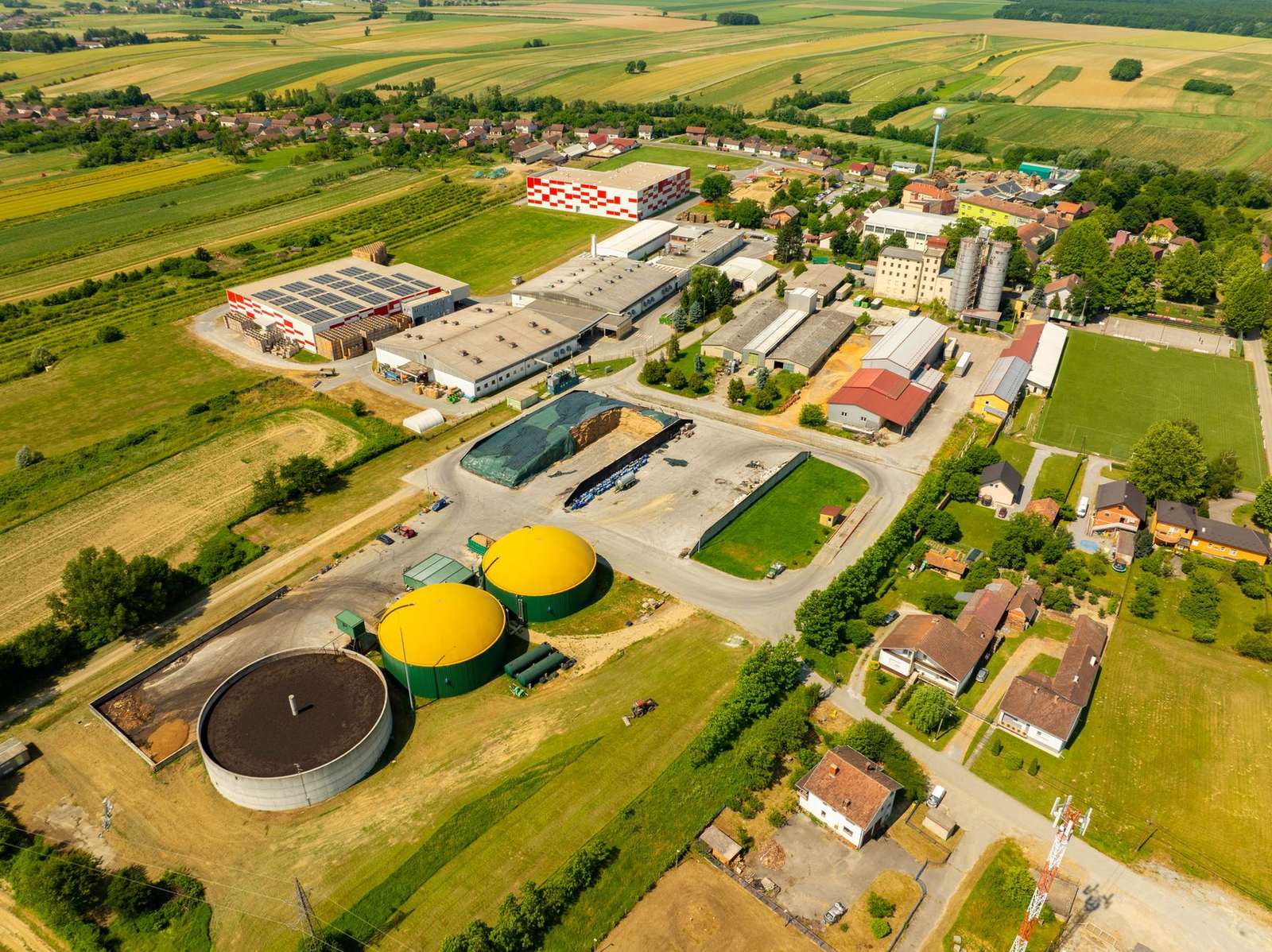
What is left is digestate, which the EPA describes as a wet mixture usually separated into a solid and a liquid. It is rich in nutrients and can be used as fertilizer for crops.
Wikipedia adds that the remaining indigestible material and any dead bacterial remains make up the digestate.
How the energy gets used
The EPA calls biogas a renewable energy source that can be used in a variety of ways. Communities and businesses use it to:
- Power engines, produce mechanical power, heat and/or electricity, including combined heat and power systems
- Fuel boilers and furnaces, heating digesters and other spaces
- Run alternative-fuel vehicles
- Supply homes and businesses through the natural gas pipeline
The EPA says how biogas is used, and how efficiently, depends on its quality. Cleaner gas opens up more uses.
Biogas is one option among many, and you can compare it with others in the guide to types of renewable energy. For a comparison of gaseous and liquid fuel routes, see green hydrogen vs biofuels.
A simple picture of the whole system
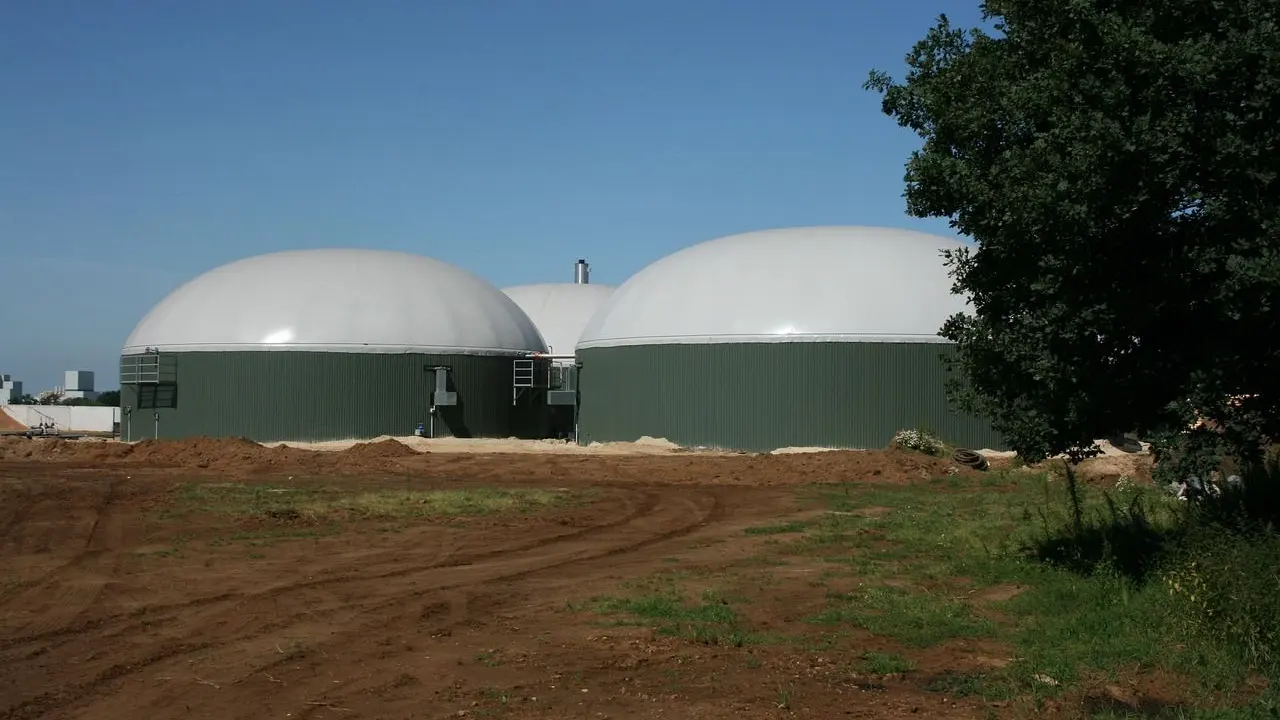
Think of a digester as a stomach built from steel or concrete. Waste goes in at one end, a community of microbes works through it in sequence, and gas and a wet residue come out the other.
Nothing in this picture is exotic. The microbes are the same kinds that live in sediments and soils, so the engineering job is mostly about keeping conditions steady enough for them to work.
A typical plant therefore has a few basic parts:
- A feed system that loads the waste into the sealed tank
- The digester itself, where the four stages take place without air
- A way to collect the biogas as it is produced
- A way to handle the digestate, usually by separating solid and liquid
The EPA says biogas is produced throughout the anaerobic digestion process, so gas collection runs continuously rather than at the end.
Why it matters for waste
Wikipedia says anaerobic digestion reduces sludge volume and pathogen content while generating methane-rich biogas for renewable energy production. It is used as part of the process to treat biodegradable waste and sewage sludge.
So one system does two jobs: it treats waste and it produces energy. The digestate can then return nutrients to farmland.
For a household or a town, the practical appeal is that material otherwise treated purely as a disposal problem becomes a feedstock. Food waste, manure and sewage sludge all follow the same basic principles inside the tank.
That does not make every project simple. Feed quality, tank conditions and gas cleaning all shape how well a plant performs, and the EPA notes that how biogas is used depends on its quality.
When you read about a specific plant, ask three questions: what goes in, how steady the conditions are, and what happens to the gas and the digestate. Those answers explain most of the difference between one project and another.
Frequently asked questions
Does anaerobic digestion need oxygen?
Show answer
No. It takes place in sealed tanks without air, because the microbes involved work in the absence of oxygen.
What can go into a digester?
Show answer
The EPA says the same basic principles apply whether the feedstock is food waste, animal manures or wastewater sludge.
Is biogas the same as natural gas?
Show answer
Not quite. Biogas is mostly methane and carbon dioxide. Once the carbon dioxide and other gases are removed, what remains is methane, the primary component of natural gas, according to the EPA.
What happens to the leftover material?
Show answer
It is called digestate, a nutrient-rich wet mixture that farmers can use as fertilizer.