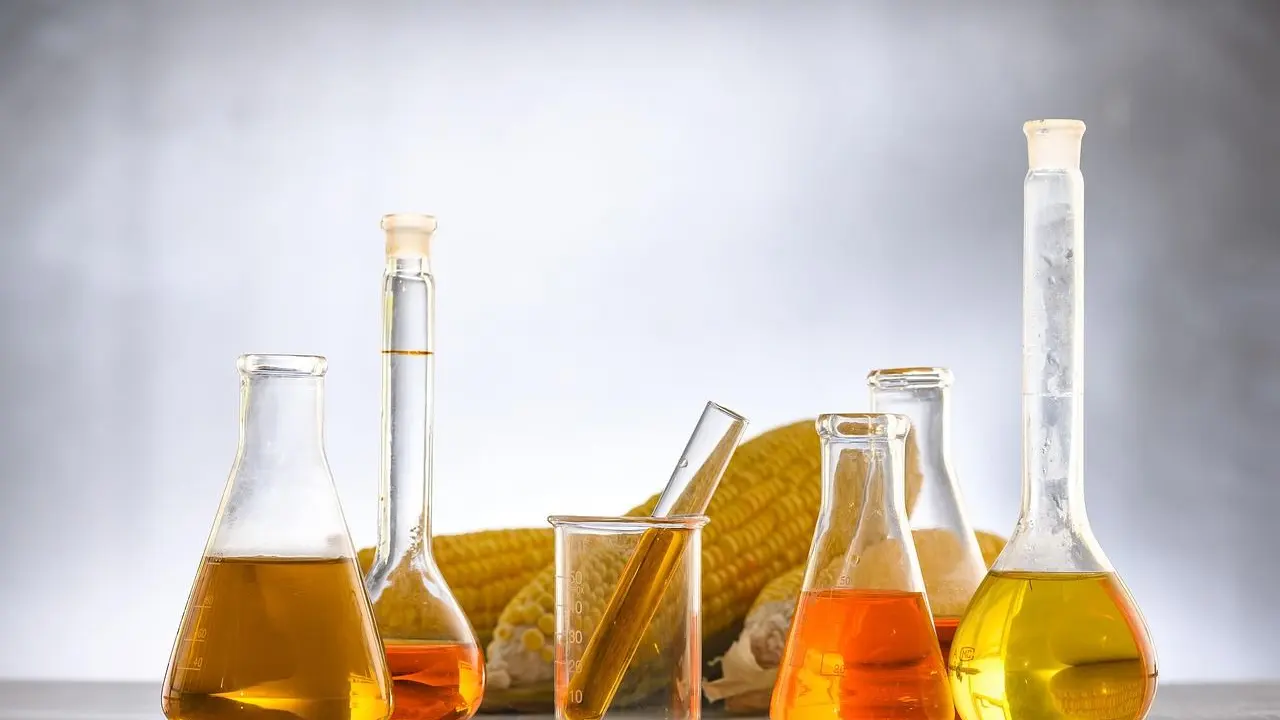
Wondering which fuels count as advanced? Common advanced biofuels examples are cellulosic ethanol, biodiesel, renewable diesel and fuels from pyrolysis or gasification. Each is defined by its feedstock and its process.
| Item | Key fact |
|---|---|
| Advanced biofuel (US RFS) | Any fuel derived from cellulosic or advanced feedstocks |
| Cellulosic biofuel | Derived from cellulose, hemicellulose, or lignin |
| Biomass-based diesel | Includes biodiesel and non-ester renewable diesel |
| Most common renewable diesel route | Hydrotreating of fats, oils and greases |
| Biodiesel quality standard | ASTM D6751 |
These definitions come from the U.S. Alternative Fuels Data Center page on the Renewable Fuel Standard and its renewable diesel page. Regulations and plant practice can change, so check the sources before you rely on them.
What makes a biofuel “advanced”?
There is no single global definition, so the label depends on the rulebook you use. In the United States, the Renewable Fuel Standard (RFS) is the best-known one. The AFDC describes the program as originating with the Energy Policy Act of 2005 and being expanded and extended by the Energy Independence and Security Act of 2007 (EISA).
Under that framework, an advanced biofuel is described by the AFDC as “any fuel derived from cellulosic or advanced feedstocks.” Each category must also emit lower levels of greenhouse gases than the petroleum fuel it replaces. The AFDC says EISA set a life cycle emissions threshold for each category.
If you are new to the topic, start with the basics of what are biofuels. This article then sorts the advanced examples by feedstock and by process.
How the RFS nests advanced categories
The AFDC says two sub-categories sit inside advanced biofuels. They are cellulosic biofuel and biomass-based diesel. Volumes of either that exceed their own category can also be used to meet the advanced category.
- Cellulosic biofuel: any fuel derived from cellulose, hemicellulose, or lignin, which are nonfood-based renewable feedstocks.
- Biomass-based diesel: a diesel fuel substitute made from renewable feedstocks, including biodiesel and non-ester renewable diesel.
- Advanced biofuel: the wider group that holds both of the above plus other qualifying fuels.
The AFDC says EPA tracks compliance through the Renewable Identification Number (RIN) system, which assigns a RIN to each gallon of renewable fuel.
Examples by feedstock
The quickest way to understand advanced fuels is to match each feedstock to its product. Feedstock choice shapes the process, the cost and the category.
Cellulose, hemicellulose and lignin
These are the structural parts of plant material, and they are nonfood-based. Fuels made from them fall in the cellulosic category. Typical raw materials include crop residues, grasses and wood, though the RFS definition itself is written in terms of the plant components rather than a fixed list.
Because these materials are tough, they usually need breaking down before fermentation or conversion. A separate guide to lignocellulosic biomass pretreatment explains that step.
Fats, oils and greases
Lipid feedstocks feed two different fuels. The AFDC says biodiesel is a mono-alkyl ester produced via transesterification. It also says renewable diesel is a hydrocarbon produced most often by hydrotreating.
The AFDC states plainly that renewable diesel and biodiesel are not the same fuel. Biodiesel meets ASTM D6751 and is approved for blending with petroleum diesel, according to the same page.
Wider biomass for thermal routes
Gasification and pyrolysis can handle solid biomass. The AFDC says gasification thermally converts biomass to syngas, which is then catalytically converted to hydrocarbon fuels. Pyrolysis, in the AFDC’s words, involves the chemical decomposition of organic materials at elevated temperatures in the absence of oxygen.
Examples by process
The same fuel type can come from more than one route. This table groups the routes named by the AFDC.
| Route | What happens | Product |
|---|---|---|
| Transesterification | Lipids are converted to mono-alkyl esters | Biodiesel |
| Hydrotreating | Lipids react with hydrogen under heat and pressure with a catalyst | Renewable diesel |
| Gasification | Biomass becomes syngas, then hydrocarbons | Renewable diesel |
| Pyrolysis | Biomass is heated without oxygen to a liquid oil, then upgraded | Hydrocarbon fuels |
The routes in this table are summarised from the AFDC renewable diesel page. Technology descriptions there may be updated, so check the page before you rely on them.

The AFDC adds that pyrolysis oil can be upgraded in a standalone process or co-fed with crude oil into a standard petroleum refinery. That co-feeding option lets producers reuse existing refining equipment.
Renewable diesel versus biodiesel
These two fuels are often confused, yet they differ in chemistry. Biodiesel is an ester, while renewable diesel is a hydrocarbon. The AFDC says commercial renewable diesel plants use the hydrotreating pathway, with fats, oils, and greases as the most common feedstocks.
Both appear under the biomass-based diesel label in the RFS, since the AFDC definition names biodiesel and non-ester renewable diesel together. In practice that means a fleet operator, a policy analyst and a student may all use the same category name for chemically different products.
The difference matters for handling and blending. Biodiesel has its own quality standard and is approved for blending with petroleum diesel, according to the AFDC. Renewable diesel, being a hydrocarbon, is described by the AFDC as a different fuel, so its specifications should be checked separately. A reader comparing them should look at three things:
- The chemical form of the finished fuel.
- The process used to make it.
- The standard it must meet, such as ASTM D6751 for biodiesel.
How to read a feedstock claim
When a fuel is described as advanced, three questions help you judge the claim. The answers tell you whether the label is about the raw material, the process or the emissions result.
- Which feedstock? Nonfood cellulose, hemicellulose or lignin points to the cellulosic category, while fats, oils and greases point to the diesel categories.
- Which process? Transesterification gives an ester, while hydrotreating and gasification give hydrocarbons; pyrolysis produces an oil that can be upgraded to hydrocarbon fuels.
- Which rulebook? A fuel can qualify under one programme and not another, because each sets its own thresholds.
The AFDC notes that each RFS category must emit lower levels of greenhouse gases than the petroleum fuel it replaces. A feedstock alone therefore does not settle the label. The measured life cycle result for the specific pathway also matters.
This is also why two plants making the same fuel can report different results. Their feedstock mix, energy source and process design can all differ, even when the finished product meets the same standard.
Where aviation fuel fits
For the fuel itself, a separate explainer covers what is sustainable aviation fuel.
Frequently asked questions
Is corn ethanol an advanced biofuel?
Show answer
Under the RFS, advanced status is tied to cellulosic or advanced feedstocks, as the AFDC describes it. Fuel from nonfood cellulose, hemicellulose or lignin is the clearest example. Check EPA’s current rules for edge cases.
Is renewable diesel the same as biodiesel?
Show answer
No. The AFDC says they are not the same fuel. Biodiesel is a mono-alkyl ester made by transesterification, while renewable diesel is a hydrocarbon.
What feedstocks do renewable diesel plants use most?
Show answer
The AFDC says fats, oils, and greases are the most common feedstocks at commercial plants using hydrotreating.
Can advanced biofuels come from non-lipid sources?
Show answer
Yes. The AFDC describes gasification and pyrolysis routes that start from biomass and end in hydrocarbon fuels.